Apple Juice Recall: What the Bellevue Orchard Mould Contamination Teaches Us About Pasteurisation Validation
Nicole Inwood • July 8, 2026

Apple Juice Recall:

What the Bellevue Orchard Mould Contamination Teaches Us About Pasteurisation Validation

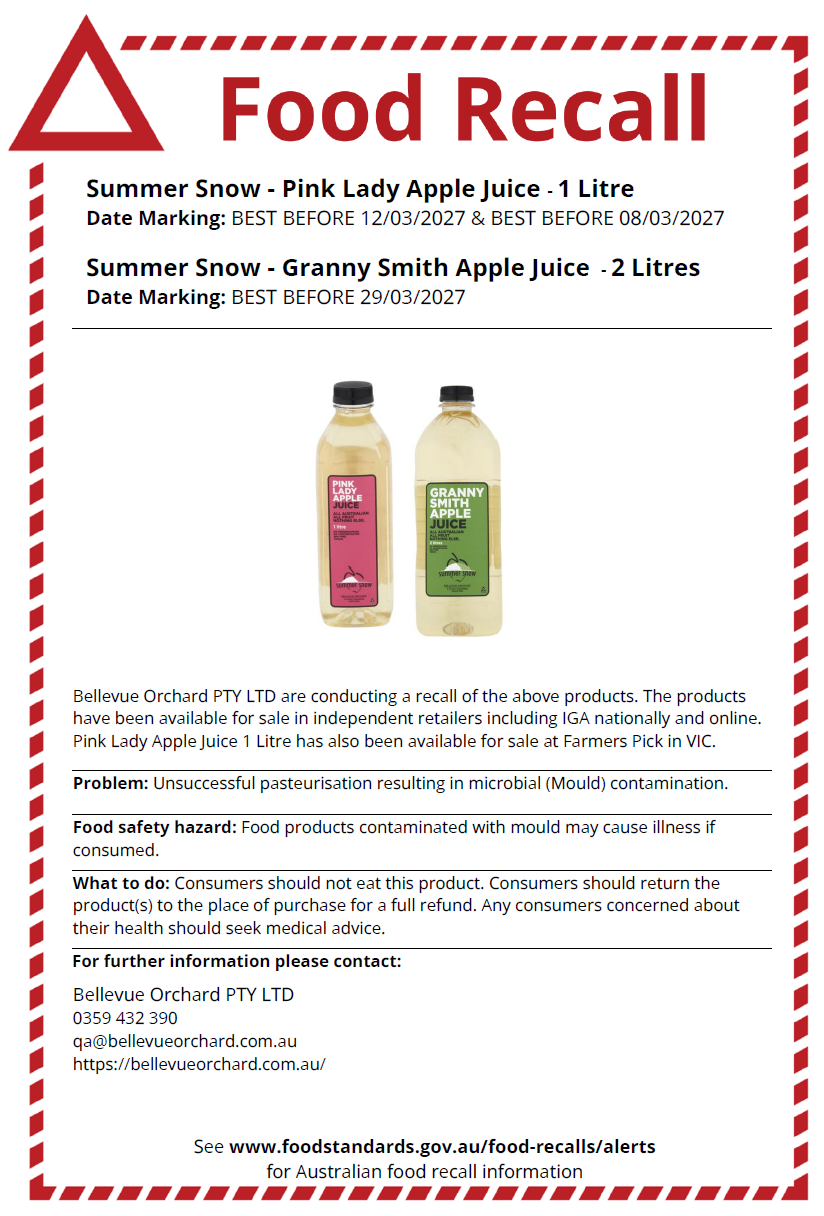
Bellevue Orchard Pty Ltd has recalled two products in its Summer Snow apple juice range, Pink Lady 1 Litre and Granny Smith 2 Litres, after unsuccessful pasteurisation led to mould contamination. The products were sold through IGA stores nationally, online, and at Farmers Pick in Victoria. For any food business running a thermal process step, this recall is a useful reminder of why pasteurisation validation matters, and it is a topic that comes up often in food safety consulting and HACCP training work.


What happened


FSANZ published an updated recall notice on 7 July 2026 for Summer Snow Pink Lady Apple Juice (1 Litre) and Summer Snow Granny Smith Apple Juice (2 Litres). The stated cause was unsuccessful pasteurisation resulting in microbial (mould) contamination. Consumers have been told not to drink the product, to return it for a full refund, and to seek medical advice if they have concerns about their health.


Why pasteurisation failures can lead to mould contamination


Pasteurisation is designed to reduce microbial load to a safe level for the intended shelf life of a product. When the process does not achieve the validated time and temperature combination, surviving organisms, including mould, can grow during storage. Fruit juice carries a particular challenge here. Some mould species produce heat resistant spores that can survive standard pasteurisation temperatures if the validation was not built around the right organism and load.


This is exactly the kind of hazard analysis question a food safety consultant or HACCP consultant works through with a client during HACCP plan development or review.


Procedure, validation and verification: three different things


A recurring theme in food safety auditing is the difference between having a process, proving it works, and checking it is still working.

  • Procedure is running the pasteuriser to a set time and temperature.
  • Validation is proving that combination achieves the microbial reduction needed for your specific product and hazard profile.
  • Verification is confirming, batch by batch, that the process ran within those validated parameters.


A gap in any one of these three areas can lead to a recall like this one, even when a business believes its food safety system is sound.


What food businesses can do


Whether you are working towards SQF, ISO 22000, or another GFSI benchmarked standard, a few practical steps can help:

  1. Review whether your thermal validation reflects the actual organisms and hazards relevant to your raw material and product.
  2. Check that critical limits in your HACCP plan are derived from validated data, not assumption or a generic industry guideline.
  3. Confirm your verification schedule is being followed and that someone is actually reviewing the monitoring data.
  4. Include mould testing in your environmental monitoring programme, particularly in post pasteurisation zones.
  5. Build this kind of review into your internal auditor training, so your team knows what to look for beyond a document check.


An external food safety auditor can also bring a fresh set of eyes to validation studies that may have been developed some time ago and never revisited.


Want structured support putting this into practice


Understanding the difference between procedure, validation and verification is one thing. Building it into your day to day system is another. Our HACCP Accelerator is a 12 week program with weekly guidance, designed to help you make practical improvements step by step, rather than working through a HACCP plan on your own with no support in between.


Related reading


For a broader look at how packaging failures can contribute to mould contamination in packaged food, see our earlier article,


Stay ahead of the next recall


Recalls like this one can be a practical step forward for the industry when they lead to better questions being asked. If you want food safety insights like this delivered as they happen, subscribe to our newsletter so you never miss an update.
Contact Us.

PO Box 9, Kangarilla, SA 5157, AU

Contact Us

By Nicole Inwood July 3, 2026
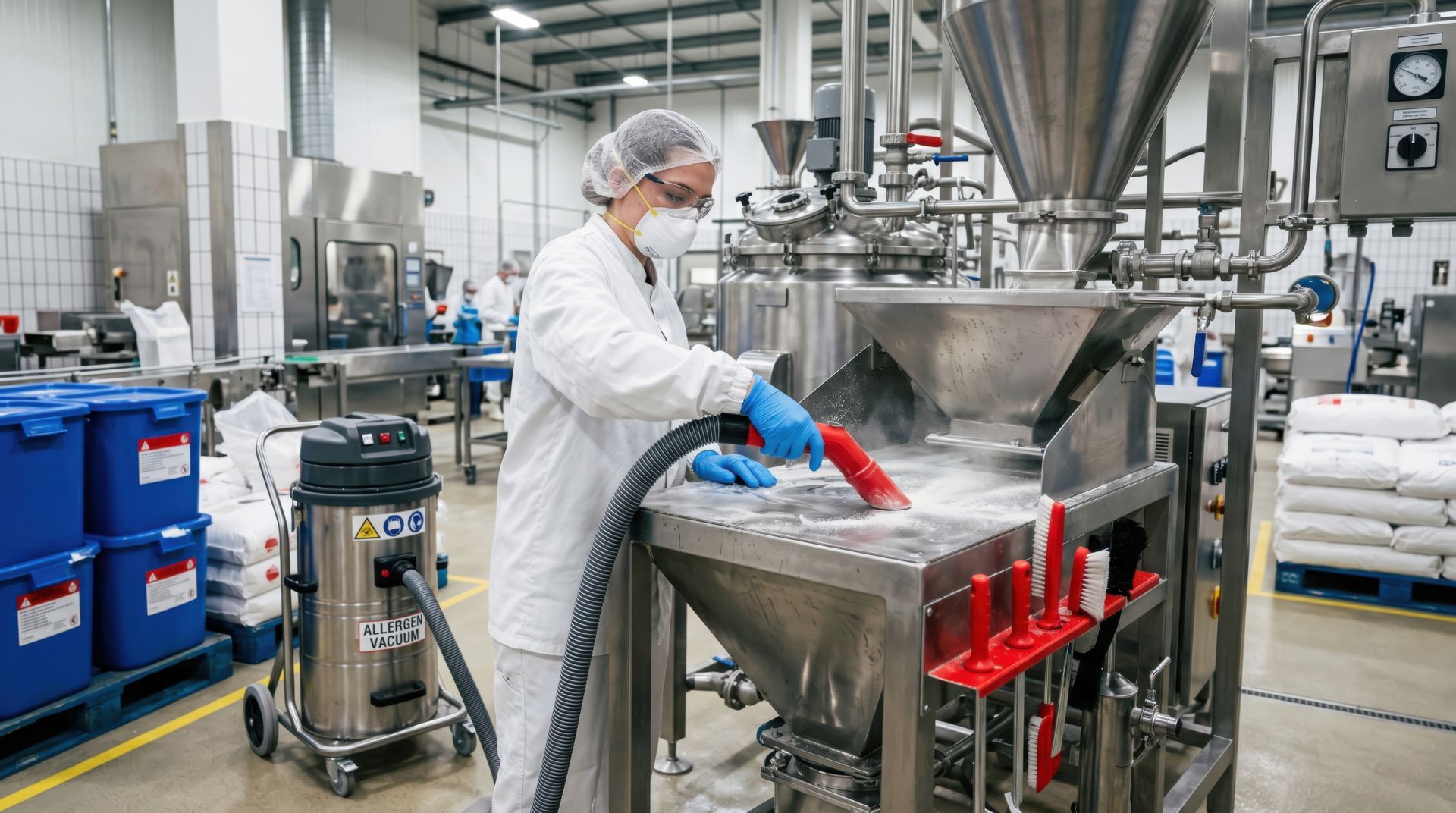
"Visually Clean" Is Not Enough: What New Research Means for Allergen Cleaning Validation
By Nicole Inwood April 24, 2026
Three allergen recalls this weeks signal a pattern food manufacturers can't ignore. Here's what's causing them and how to prevent the next one.
By Nicole Inwood April 22, 2026
Two Australian food recalls this week highlight why allergen risk management needs to extend beyond the factory and into your supply chain.

.

By Nicole Inwood March 14, 2026
MARCH 2026: MOVING FORWARD
By Nicole Inwood January 7, 2026
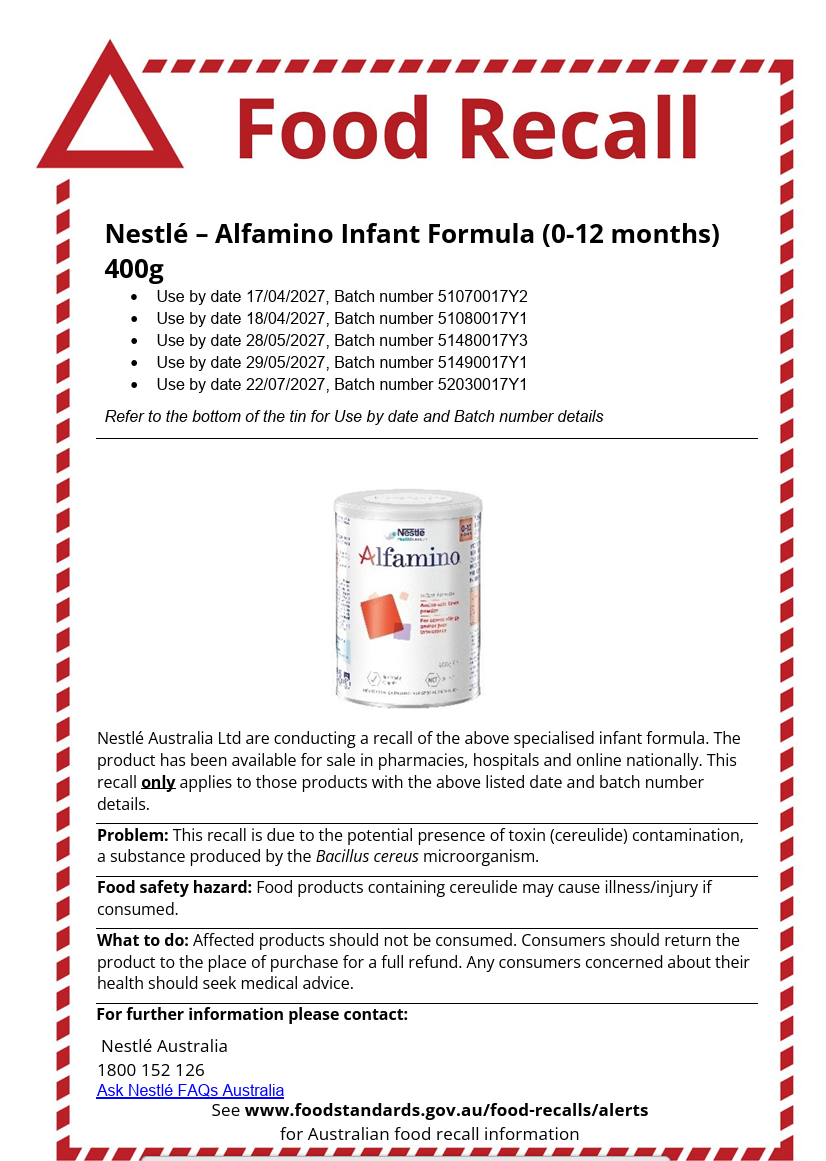
Recall Alert
By Nicole Inwood January 2, 2026
Across ISO 9001, ISO 22000, ISO 14001, and ISO 45001
By Nicole Inwood December 31, 2025
At this time of year, I always pause to look back before I look forward. I start with the evidence. Metrics. Performance data. Photos. The glimmer moments as well as the hard ones. The achievements, the breakthroughs, the incredible clients we have partnered with, and the work we are genuinely proud of. Then I focus on improvement. What worked well. What did not. Where we stretched. Where we missed the mark. Because continuous improvement only works if we are honest with ourselves. From there, I shift into a deep dive on emerging trends and what the year ahead may hold. This is not about prediction or being “right”. It is a planning tool. It is about anticipation. About building organisational muscle so we are not reacting late, but thinking early. From a food safety perspective, several forces are converging right now. Technology is a major one. AI is already influencing food safety in complex ways. On one hand, it gives us access to vast amounts of information that can support hazard analysis and system design. On the other hand, that information is not always accurate, contextual, or reflective of what is actually happening on site. This has serious implications for auditing. Auditors are increasingly presented with beautifully generated documents that may have little connection to real practices. As a result, we will see a necessary shift away from document-heavy audits and toward greater emphasis on verification, testing, and observation. Systems that exist only on paper will be exposed very quickly. Climate change is another critical factor. We are seeing disruption across supply chains, increased disease pressure in agriculture, greater reliance on sprays, and in some cases the loss of entire crops in certain regions. These pressures affect food safety directly, whether through raw material variability, water quality concerns, or increased risk of fraud as commodity prices rise. Flooding in the eastern states is a current and very real example that demands vigilance around water sources and contamination risks. Demographics and politics also play a role. Labour availability, capability, and experience continue to shift. At the same time, geopolitical decisions such as tariffs and trade restrictions can influence sourcing, cost structures, and ultimately food safety outcomes within our own country. The value in thinking deeply about these trends is not fear. It is opportunity. Risk management, when done well, allows us to mitigate emerging risks and also identify opportunities to strengthen food safety systems, protect consumers, and protect businesses. But this only works if systems are real, embedded, and understood. This is a critical moment to ask some hard questions: Is our food safety system genuinely protecting our consumers and our business? Does our HACCP plan reflect reality, or is it simply compliant on paper? Are our stakeholders aligned and capable, across our supply chain and service providers? Are we investing in upskilling to meet the challenges that are already here? If these are the questions you are thinking about, you are not alone. We share practical insights like this regularly through our newsletter, and we work with organisations to validate and strengthen HACCP plans so they stand up in practice, not just in an audit. If you want to stay ahead of emerging food safety risks and opportunities, I invite you to subscribe to our newsletter and reach out to discuss how we can support your system.  Planning early is no longer optional. It is a leadership responsibility.
By Nicole Inwood December 18, 2025
Leadership in Systems
By Nicole Inwood September 13, 2025
Top Tips for Choosing a Food Safety Consultant
By Nicole Inwood August 26, 2025
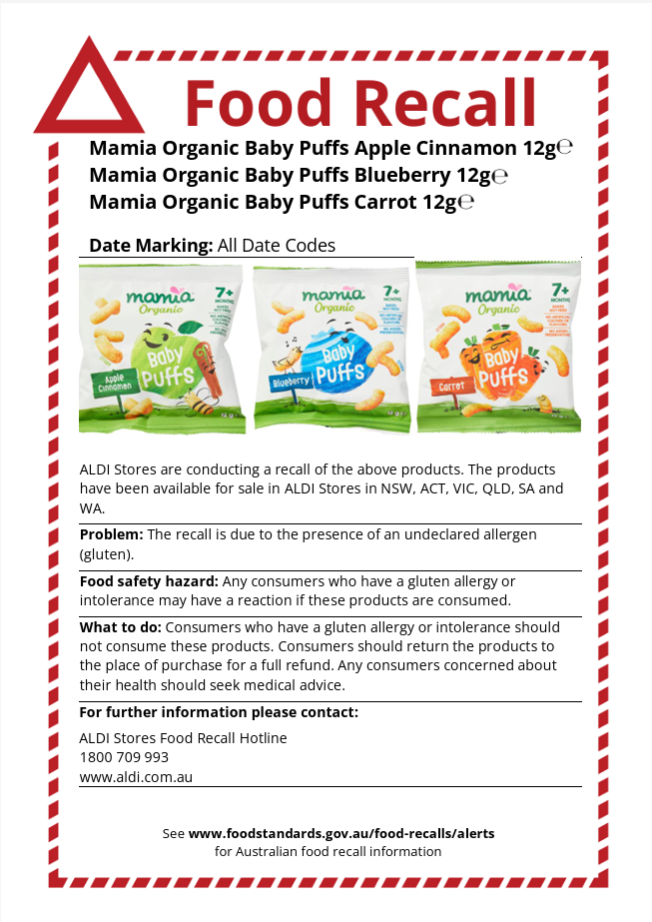
Urgent recall: Baby puff snacks
More Posts