Undeclared Milk Recall: What the Nissin Noodle Recall Teaches Food Businesses About Multi-Component Products
Practical allergen labelling checks for imported and multi-component products
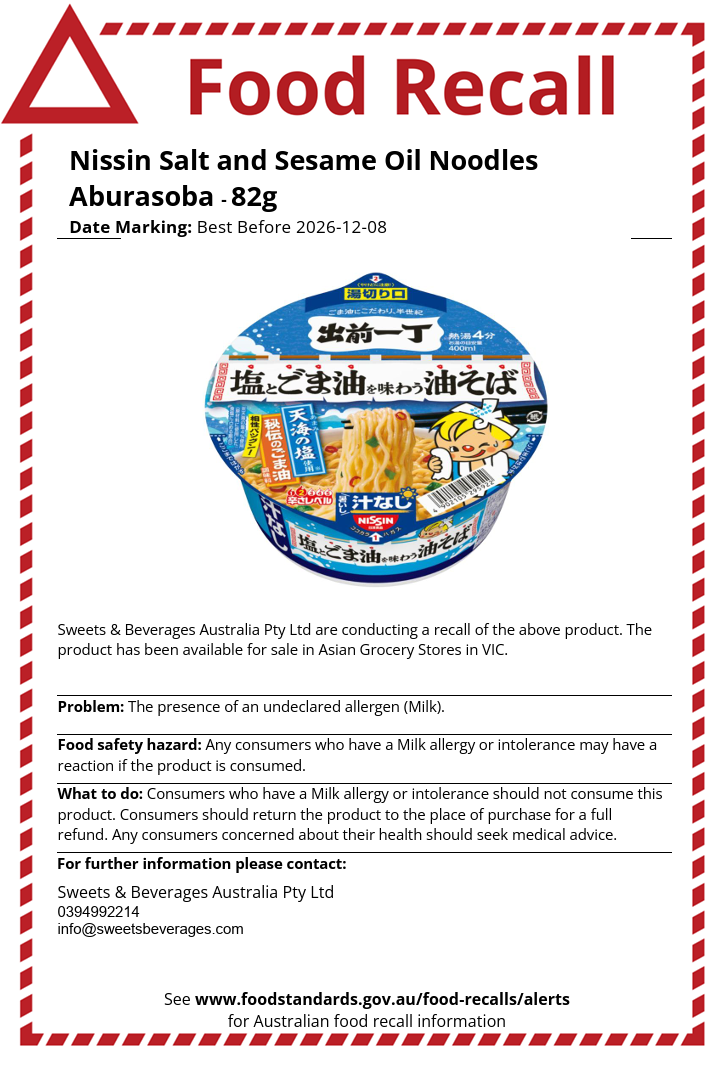
How many ingredient lists are in one packet of instant noodles? Sometimes more than you'd think.
I treat every recall as shared learning. At Pinnacle, we review our own hazard identification processes to make sure nothing is missed. We then pass on what we find to our clients and the Pinnacle Food Safety Community, so we can all help prevent similar issues.
Recall details
On 9 October 2026, Food Standards Australia New Zealand (FSANZ) published a recall for Nissin Salt and Sesame Oil Noodles Aburasoba 82g.
- Problem: undeclared allergen (milk)
- Date marking: Best Before 8 December 2026
- Where sold: Asian grocery stores in Victoria
- Consumer advice: people with a milk allergy or intolerance should not eat the product and can return it to the place of purchase for a full refund
Why multi-component products need extra attention
Imported specialty foods are a fantastic part of the Australian food landscape. They bring variety, culture and new flavours to our shelves. The label still needs to meet the Australia New Zealand Food Standards Code, and that responsibility can rest with the importer.
Products like this sometimes contain separate seasoning or oil sachets. Each sachet can carry its own ingredient list. Dairy-derived ingredients such as whey, lactose, casein, butter or cheese powder are sometimes missed. When a product is translated or re-labelled for Australia, these details can be lost.
Since the Plain English Allergen Labelling (PEAL) transition ended in February 2024, labels need to use the required allergen names, show them in bold in the ingredient list, and include a separate "Contains" summary statement.
Practical steps for importers and food businesses
Here are a few questions to ask in your own business:
- Do you review the full ingredient breakdown for every component, including sachets and compound ingredients?
- Has the translated label been checked against the original label and the supplier specification?
- Does your label review confirm the PEAL format, with bold allergen names and a "Contains" summary statement?
- Is someone with allergen labelling competence signing off new imported lines before they go on sale?
Supplier approval and allergen labelling go hand in hand. A label can only be as reliable as the information behind it.
Building capability in your team
In a HACCP plan, allergen controls for bought-in products rely on supplier approval and label review. In SQF and ISO 22000 systems, these controls need to be documented, validated and verified. A practical way to think about it:
- Procedure: what you do
- Validation: evidence that what you do works
- Verification: ongoing checks that you are still doing it
As a food safety consultant and practising certification auditor, I find the procedure is usually in place. Validation is where gaps are sometimes found.
Internal auditor training can help your team test these controls with confidence, before an external food safety auditor does. If you would like support, our HACCP training and HACCP consultant services are tailored to your products, risks and team.18ery lesson shared is one less recall waiting to happen. Our free Recall Readiness Check takes about three minutes and gives you an instant score and a practical action list.
Never miss an update
Subscribe to our newsletter so you never miss recall insights, practical food safety tips and updates on HACCP, SQF and ISO 22000.