E. coli in Pasteurised Milk: Lessons for Food and Dairy Businesses
E. coli in Pasteurised Milk: Lessons for Food and Dairy Businesses
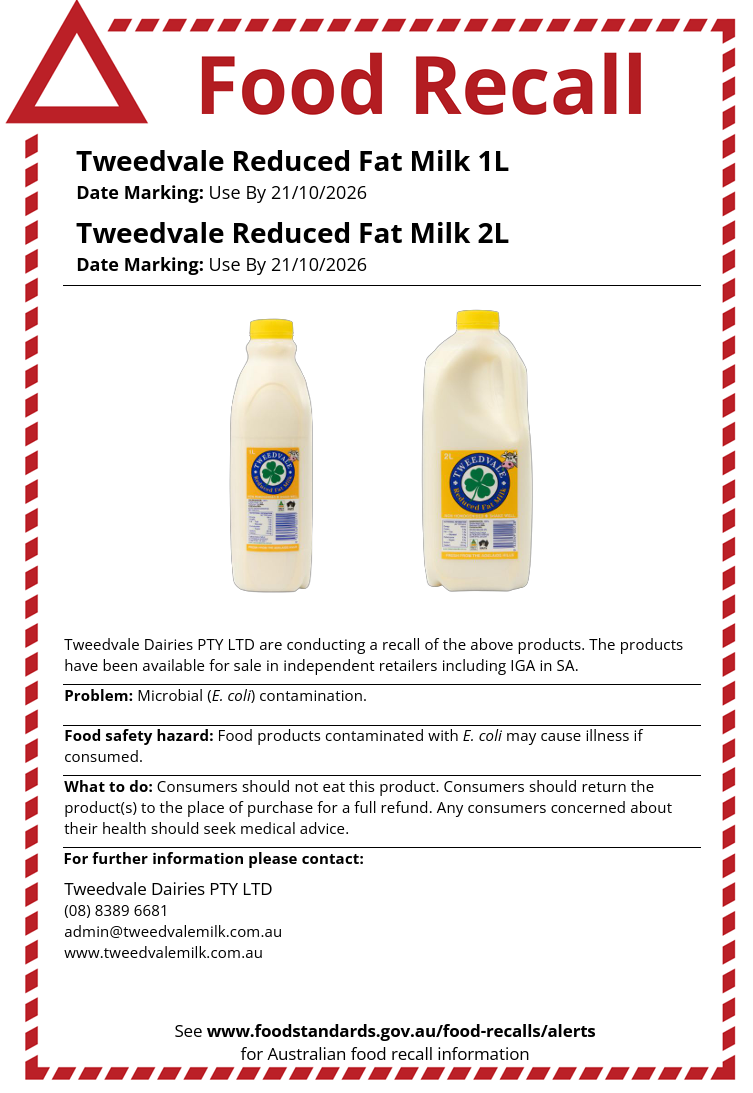
On 12 October 2026, Food Standards Australia New Zealand (FSANZ) published a recall for Tweedvale Dairies Reduced Fat Milk in 1L and 2L bottles. The product was sold through independent retailers, including IGA, in South Australia and was recalled due to microbial (E. coli) contamination.
Recalls like this are not about blame. They are a chance for every food business to check its own systems. As a food safety consultant and practising certification auditor, these are the lessons I would take from this one.
What Happened
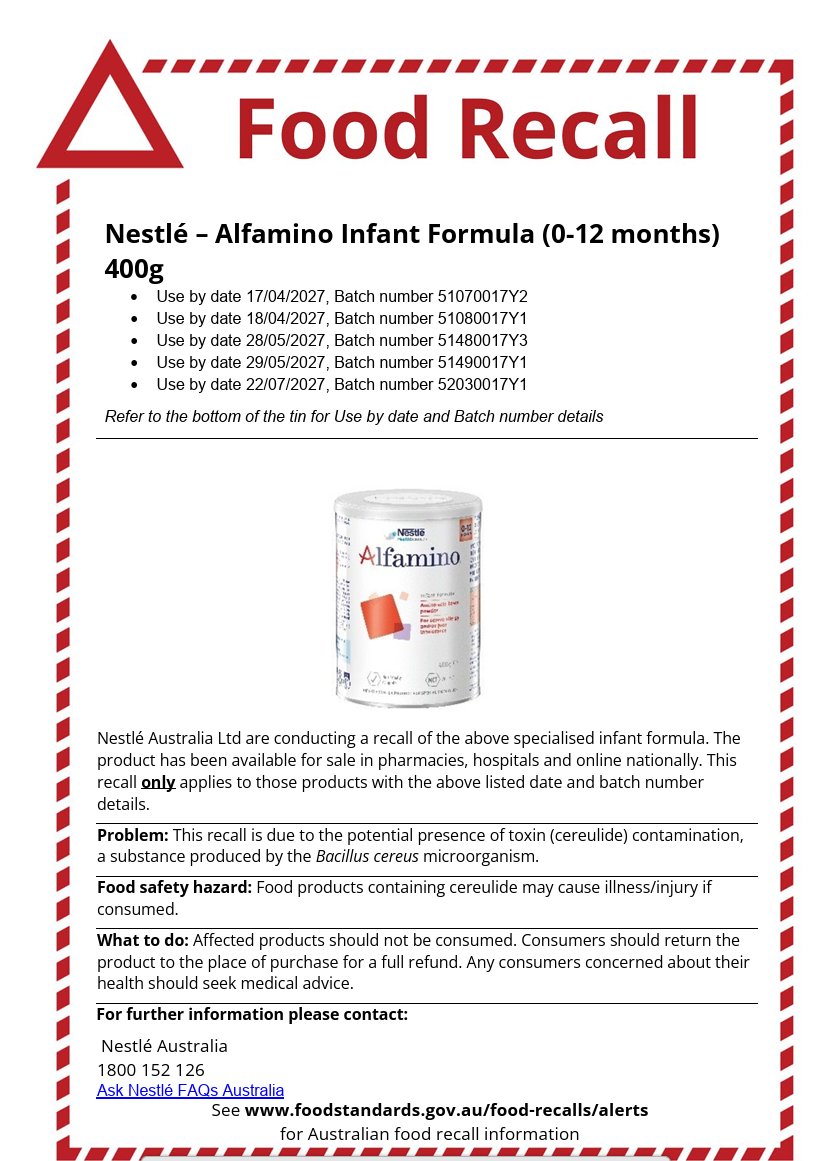
• Product: Tweedvale Dairies Reduced Fat Milk 1L and 2L
• Date marking: [INSERT USE BY DATES FROM RECALL NOTICE]
• Problem: Microbial contamination (E. coli)
• Where sold: Independent retailers including IGA in South Australia
• Consumer advice: Do not consume the product. Return it to the place of purchase for a full refund and seek medical advice if concerned
Why E. coli Matters in a Pasteurised Product
E. coli is commonly used as an indicator of hygiene. Pasteurisation is designed to destroy it. When it is found in a pasteurised product, the cause can sometimes be traced to one of two areas:
• The heat treatment was not achieved, for example a temperature drop or a diversion valve fault
• The product was contaminated after pasteurisation, for example at the filler, in pipework, or through a heat exchanger leak
The recall notice does not state a cause, and both possibilities are worth checking in any dairy or heat-treated food operation.
The Pasteurisation CCP
In most dairy HACCP plans, pasteurisation is the key critical control point. The standard time and temperature is a minimum of 72°C for 15 seconds, or an equivalent combination. Controls that support this step include:
• Automatic flow diversion if the temperature falls below the critical limit
• Continuous temperature recording, reviewed before product is released
• Daily checks that the flow diversion valve operates correctly
• Calibration of thermometers and recorders
After the Heat Step
Post-pasteurisation contamination is sometimes missed because attention is focused on the CCP. Practical controls include:
• Keeping the pasteurised side of the plate heat exchanger at a higher pressure than the raw side
• Testing heat exchanger plates for pinhole leaks and cracks at a set frequency
• Validating cleaning of fillers, valves and balance tanks
• Environmental monitoring around the filling area
• Testing finished product for hygiene indicators such as Enterobacteriaceae or coliforms
How This Links to HACCP, SQF, BRCGS and ISO 22000
In SQF, BRCGS and ISO 22000 systems, control measures are expected to be documented, validated and verified. A practical approach is to treat them as three separate steps:
• Procedure: what you do
• Validation: evidence that what you do works
• Verification: ongoing checks that you are still doing it
Internal auditor training can help your team test these controls before an external food safety auditor does.
How Pinnacle Can Help
Pinnacle Management Systems supports food and dairy businesses with HACCP consultant services, HACCP training, validation and verification programs, and internal auditor training. Every program is tailored to your business, products and risks.
• Check how your business would respond to a recall with our free Recall Readiness Check
• Build your HACCP plan with confidence through the HACCP Accelerator, our 12-week implementation program
• Join food safety professionals sharing practical experience in the Pinnacle Food Safety Community
Subscribe So You Never Miss an Update
New recall lessons and practical food safety guidance are published regularly. Subscribe to our updates so you never miss information that could help your business.
https://www.pinnaclems.com.au/email-subscription