When the Hazard Is in the Packaging: Lessons from a Spring Water Recall
Packaging Recall Lessons: Choking Hazards and HACCP
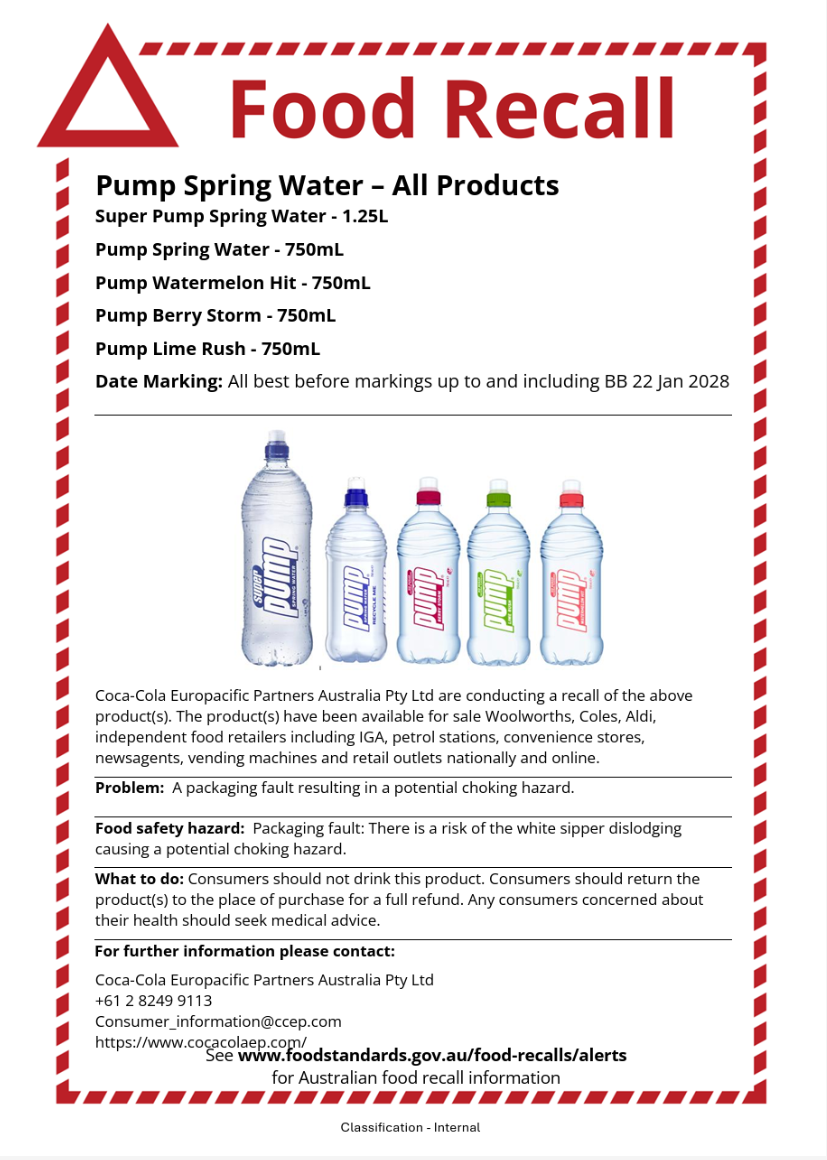
On 3 November 2026, Food Standards Australia New Zealand (FSANZ) published a recall for all Pump Spring Water products. The white sipper on the cap may dislodge, creating a potential choking hazard.
Recalls like this are not about blame. They are a chance for every food business to check its own systems. As a food safety consultant and practising certification auditor, these are the lessons I would take from this one.
What Happened
• Products: Super Pump Spring Water 1.25L, Pump Spring Water 750mL, Pump Watermelon Hit 750mL, Pump Berry Storm 750mL and Pump Lime Rush 750mL
• Date marking: All best before markings up to and including 22 January 2028
• Problem: Packaging fault. The white sipper may dislodge, creating a potential choking hazard
• Where sold: Nationally and online, including supermarkets, independents, petrol stations, convenience stores and vending machines
• Consumer advice: Do not drink the product. Return it to the place of purchase for a full refund
Why Packaging Belongs in Your Hazard Analysis
Water is a low-risk product in many ways. That can make the hazard analysis feel quick to complete.
The consumer does not only interact with the contents, though. They hold the bottle, open the cap and put the sipper in their mouth. Any part that can separate during normal use is a potential physical hazard.
Packaging is sometimes missed because it arrives as a dry good and is approved through purchasing. Including each component in the hazard analysis helps make sure it gets the same attention as the ingredients.
Thinking About Who Uses the Product
HACCP asks you to describe the intended use of your product and who is likely to consume it. Sports caps are designed for drinking on the move, and children can be regular users.
Considering how people use the product in real life, including reasonably expected misuse, can change how you rate the severity of a small detachable part.
Specifications That Describe Performance
Packaging specifications commonly cover materials, dimensions and food contact compliance. Those are important. For closures and dispensing parts, it can also help to include performance requirements, such as how much force is needed before a part comes away.
A specification that describes performance gives you something measurable to validate and verify.
Practical Steps for Your Business
• List every packaging component the consumer handles or puts in their mouth, and include each one in your hazard analysis.
• Review your product description for intended use and likely consumer groups, including children.
• Add functional performance requirements to closure and component specifications.
• Ask suppliers for test data that shows components stay in place under expected use.
• Route closure, supplier, tooling and capping changes through food safety change control.
• Trend complaints for packaging function issues as well as foreign matter.
• Include packaging controls in your internal audit program.
Managing Packaging Changes
A new closure supplier, a new mould or an adjustment to capping equipment can all affect how a component performs. These changes are sometimes treated as procurement or engineering decisions.
Routing them through your food safety change control means they are validated first, before they reach the market.
How This Links to HACCP, SQF and ISO 22000
In a HACCP plan, packaging hazards are usually controlled through supplier approval, specifications and change control. In SQF and ISO 22000 systems, these controls are expected to be documented, validated and verified. A practical approach is to treat them as three separate steps:
• Procedure: what you do
• Validation: evidence that what you do works
• Verification: ongoing checks that you are still doing it
HACCP training and internal auditor training can help your team test these controls before an external food safety auditor does.
How Pinnacle Can Help
Pinnacle Management Systems supports food businesses with HACCP consultant services, HACCP training, supplier risk assessment and internal auditor training. Every program is tailored to your business, products and risks.
• Check how your business would respond to a recall with our free Recall Readiness Check
• Build your HACCP plan with confidence through the HACCP Accelerator, our 12-week implementation program
• Join food safety professionals sharing practical experience in the Pinnacle Food Safety Community
Subscribe So You Never Miss an Update
New recall lessons and practical food safety guidance are published regularly. Subscribe to our updates so you never miss information that could help your business